
Strapping In Could Be All It Takes To Fix Your Lower Back Pain, Correct Your Posture, And Get Rid Of That Annoying Tummy Fat
- Larry Potter

- Jun 4
- 4 min read

Standing for long periods, carrying a case of water, or lifting my grandsons used to cause some real discomfort in my lower back, leaving me sore the next morning. Along with that, I noticed my back was starting to curve more, which I call an "old man's hump". And, although my weight was correct, I could not get rid of the lower belly fat that always made my clothes feel tight.
However, about 8 months ago, while obtaining a personal trainer certification, I read about the benefits of performing targeted core exercises (including glute exercises). Now, after making those exercises a part of my workout, my days are pain-free, except for a few minutes of stiffness when I first get out of bed, I am either wrestling with or carrying my grandsons with no pain or soreness. My posture is so much better, and with a reduced abdomen, my clothes no longer feel annoying.
Studies estimate that 75% of adults over the age of 60 experience lower back pain, with approximately 45.6% of adults aged 65 and older suffering from frequent back pain. The good news is that, although the spine undergoes age-related wear and tear, most pain is actually due to weak muscles and preventable lifestyle factors rather than structural damage.
It's called "core strength" for a reason
Our core strength is far more important than most people realize. Did you know that most of what we do after age 60 relies on the strength of our core muscles? Activities such as standing up, sitting down, getting in and out of the car, bending over, and reaching for high shelves all depend on this strength.
Your core muscles also provide the foundation for your balance. They serve as an anchor for your center of gravity, helping you stay steady whether you are sitting, standing, or moving. A strong core helps align your posture, while a weak core can leave you feeling unsteady.
Additionally, consider how lower back pain resulting from a weak core can affect you mentally, emotionally, and even in your relationships. Too often, we feel older adults don't attend social gatherings because they can't sit or stand for long periods due to lower back problems.
Not all core exercises are suitable for older adults
Back in the day, sit-ups and crunches were considered the best exercises for strengthening core muscles. However, they are not as effective as previously thought. These exercises primarily target only a few muscles and can pose risks for older adults. Personally, I've found that sit-ups and crunches not only strain my neck but also overwork my hip muscles. When these muscles become too strong, they can pull on the lower back, leading to back pain instead of alleviating it.
You don't have to go to a gym to start feeling better
For me, a combination of machines, Pilates, and stretching is most effective for strengthening my core and building my glutes. If the gym isn't for you, there are plenty of things you can do at home to strengthen your core and build your glutes.
Don't let it end with a pain in the butt
I know it's cheesy, but I couldn't help but say it; it’s funny and absolutely true. If you are thinking about trying these exercises with no intention of continuing, let me save you the discomfort, don't start.
Strengthening your core will usually come with soreness, or at least some discomfort, in your abs and glutes for up to 4 weeks. However, it is one of the most important exercises you can do after 60. That is why I do, and recommend you do, core strengthening, including strengthening glutes, as a part of your workout 3 times a week.
**SPECIAL NOTE** Especially as we get older, it is always best to consult with a primary care provider before starting any new exercises.
Three great core builders for older adults that can be done at home
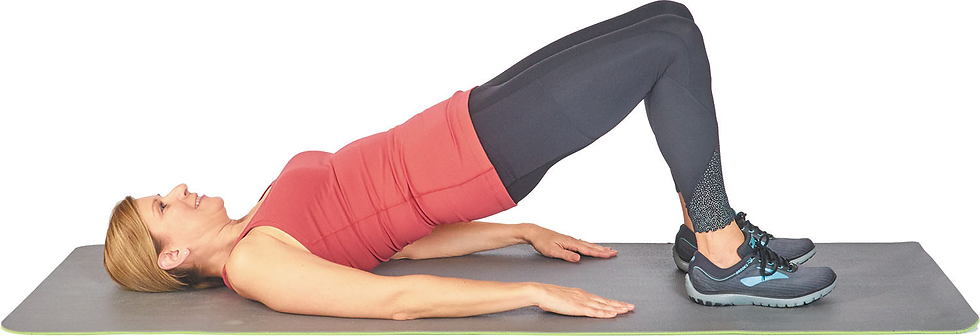
Bridges. Anyone can do a bridge exercise. Begin by lying flat on your back. Bend your knees and place your feet flat on the floor, hip-width apart. Keep your arms at your sides.
To start, tighten your buttocks and lift your hips off the floor, creating a straight line from your knees to your shoulders. Hold this position for a moment, then lower your hips back to the ground.
Repeat this process 10 times.
Planks. Planks engage the core, arm, and shoulder muscles as you hold a push-up position. The key is staying as stiff as you can, like a wooden plank. Start on your hands and knees. Tighten your abdominal muscles and lower your upper body onto your forearms, aligning your shoulders directly over your elbows and keeping your feet in the air behind you. Keep your back straight, making your body as much like a "plank" as possible. Hold the position and return to the starting position. Repeat 10 times.

Opposite arm and leg raise. This exercise gets you on your hands and knees, with your head and spine neutral. Extend your left leg off the floor behind you while reaching out in front of you with your right arm. Keeping your hips and shoulders squared, try to bring that leg and arm parallel to the floor. Hold, then return to the starting position.
IMPORTANT: Movements should be slow and controlled; DO NOT throw your arm and leg out fast.
Repeat the exercise with your right leg and left arm. Repeat the exercise on both sides 10 times.


Comments