
How Old Are You Really? The Number May Surprise You.
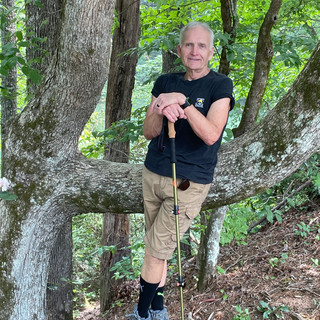
When Someone Says, “You Sure Look Younger”.
A few months ago, I turned 71. Or did I?
When my age comes up at the gym, people are often surprised. Not because I look younger—my mirror and I have already settled that debate—but because my active lifestyle doesn't seem to match the number on my birth certificate.
Sometimes they'll ask how old I am, then give me a look that suggests I've either miscounted the candles on my birthday cake or borrowed someone else's driver's license.
I usually smile, thank them, and move on. But their comments do raise an interesting question:
How old am I really?
And perhaps an even better question:
How old are you?
Most of us know our chronological age. That's simply the number of years that have passed since we were born. It's easy to calculate and impossible to change. Every birthday adds another candle to the cake.
But there is another measurement that may be even more important—our biological age (Want to know your biological age, click "Biological Age Calculator" below.
Biological age reflects how well our bodies are actually functioning. Two people can both be 71 years old chronologically, yet one may have the health, energy, and mobility of someone twenty years younger, while the other may struggle with conditions more commonly associated with someone much older.
In other words, the calendar may say one thing, but our bodies may be telling a different story.
I learned that lesson firsthand.
When I was 40, my oncologist told me that the chemotherapy, radiation, and surgery that saved my life would effectively age me by about fifteen years. If he was correct, I recently celebrated my 86th birthday.
Unfortunately, the years that followed seemed to support his prediction.
The treatments that saved my life also took a toll on my health. As time passed, I accumulated a long list of medical problems. My body felt much older than the number on my driver's license.
Then something happened that changed the direction of my life.

I began learning about lifestyle medicine and the remarkable ability of the human body to heal, recover, and adapt when given the right conditions. I discovered that while I could not change my chronological age, I could influence my biological age.
That realization gave me hope.
So I began making different choices.
I improved my diet. I became more physically active. I paid closer attention to sleep. I learned to manage stress better. I also recognized the importance of healthy relationships and staying socially connected.
None of those changes happened overnight. There was no magic formula and no quick fix. But over time, those small daily choices began producing results that surprised even me.
Today, I have more energy than I did twenty years ago, and I am able to enjoy activities that once seemed out of reach.
Research continues to show that lifestyle choices play a major role in healthy aging. Studies suggest that as much as 80 percent of cardiovascular disease and up to 50 percent of many cancers may be linked to modifiable lifestyle factors. While none of us can guarantee perfect health, we often have far more influence over our future than we realize.
That is encouraging news for those of us in our sixties, seventies, and beyond.
Too often, society teaches older adults to expect a steady decline. We hear phrases like, "That's just part of getting older."
Sometimes that's true. Aging is inevitable.
But unnecessary suffering and many preventable diseases do not always have to be.
Over the years, I have written about “SuperLifers.” SuperLifers are people in their sixties, seventies, and eighties who look and live younger than some people in their forties and fifties. They climb mountains, camp for weeks, scuba dive, travel the world, teach foreign languages, coach others, play in bands, write blogs, and even jump out of airplanes.

Their secret isn't luck.
They stay physically active, mentally engaged, *socially connected, and purposeful in their daily lives.
In many ways, their biological age appears much younger than their chronological age.
If you would like to know your biological age, I have found the Biological Age Calculator provided by Triangle Disc Care is a safe, free informational tool.
So, how old are you really?
The answer may not be found on your birth certificate.
It may be found in the choices you make every day.
None of us can turn back the clock.
Neither can I.
But we can influence how well our bodies and minds function as the years go by.
And the next time someone says, "You sure look younger," perhaps they are noticing something more important than fewer wrinkles or less gray hair.
Perhaps they are seeing a biological age that tells a different story.
*The significance of being socially connected “Check out my post “Growing Older, Growing Better, The Power Of Friendship”


Comments